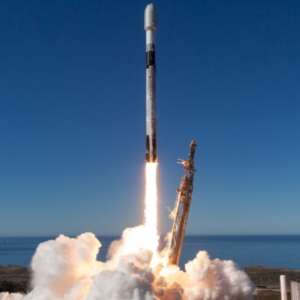


In 2025, the United Arab Emirates recorded a landmark year in its journey to become a global leader in space science and advanced technology. Through a series of strategic satellite launches, international partnerships, and long-term capacity-building initiatives, the UAE continued its transition toward an innovation-driven, knowledge-based economy.
A defining achievement of the year was the expansion of the UAE’s orbital infrastructure. Multiple satellites were successfully deployed, strengthening national capabilities in communications, Earth observation, and scientific research. These included advanced platforms designed to enhance environmental monitoring, disaster response, urban planning, and national security. The introduction of the country’s first domestic radar satellite capability marked a significant step forward, enabling high-resolution data collection regardless of weather conditions or time of day.
International collaboration remained central to the UAE’s space strategy. In a major milestone, the Mohammed Bin Rashid Space Centre (MBRSC) entered into long-term partnerships with leading global space organisations to support lunar exploration. A 15-year commitment to the Lunar Gateway programme secured the UAE a permanent presence in cislunar space and laid the foundation for the nation’s first astronaut mission to the Moon. These partnerships positioned the UAE as a trusted contributor to humanity’s next phase of deep-space exploration.
The country also made significant progress on its flagship lunar mission. Preparations for the Rashid 2 Rover advanced steadily, with the spacecraft successfully completing rigorous environmental and mechanical testing within the UAE. Agreements with international partners ensured access to advanced landing systems and scientific instruments, reinforcing the nation’s growing technical expertise in complex space missions.
Beyond exploration, the UAE strengthened its role in regional and global cooperation. A UAE-led Arab satellite initiative brought together partners from across the region, demonstrating how space data can support sustainable development, resource management, and climate resilience. This collaborative approach highlighted the UAE’s commitment to using space technologies for shared regional benefit.
Equally important was the focus on human capital and long-term sustainability. Advanced training programmes in satellite engineering and space sciences were expanded through national institutions, ensuring the development of skilled Emirati talent. Meanwhile, the Emirates Mission to the Asteroid Belt continued its design and planning phases, reflecting the country’s long-term scientific ambition.
Together, these achievements underscored the UAE’s emergence as a credible, innovative, and responsible player in global space exploration, with 2025 marking a pivotal year in shaping its future beyond Earth.